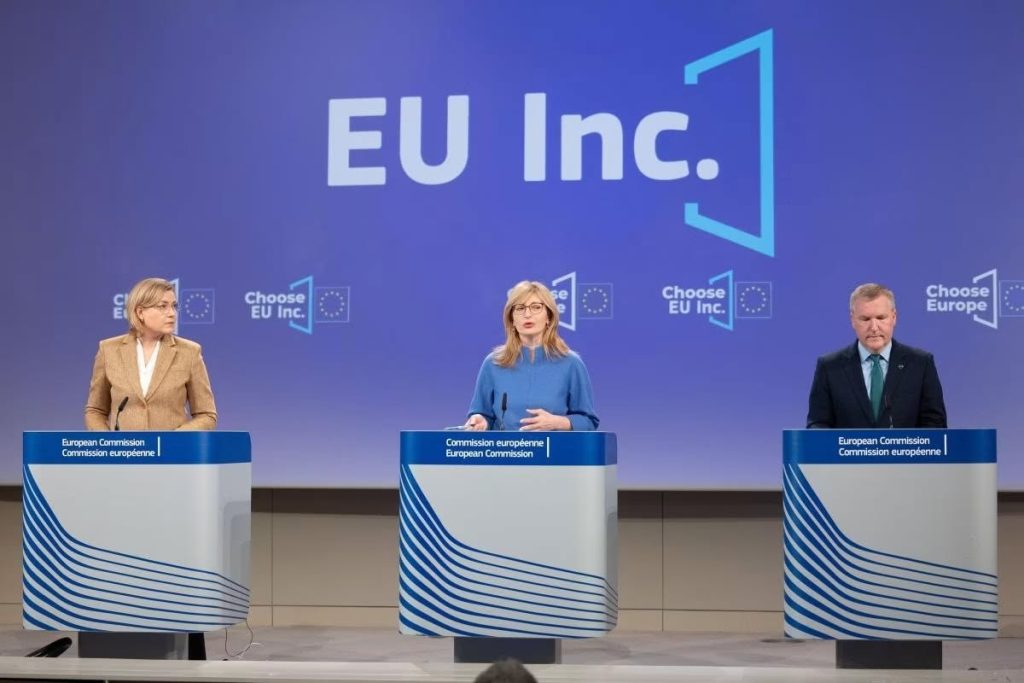

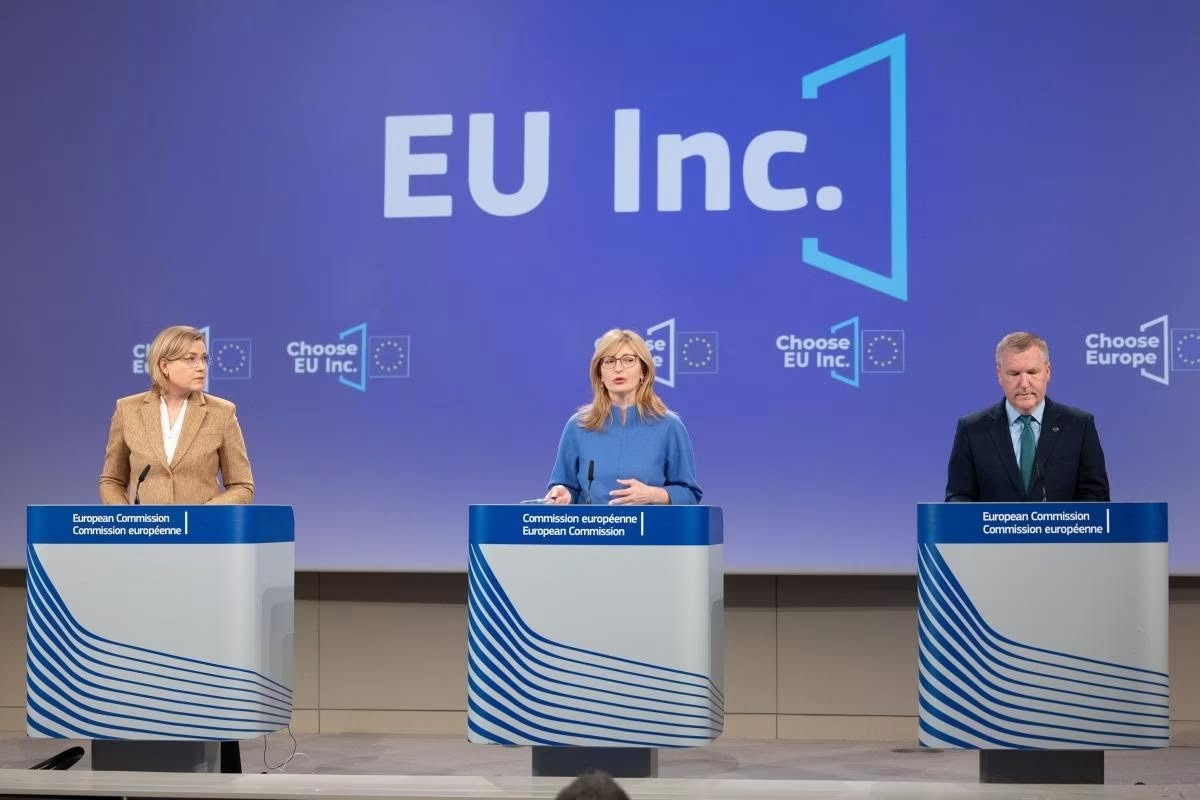
The initiative envisions a fully digital procedure for starting a business within the European Union
The European Commission presented the “EU Inc.” concept — a new voluntary pan-European legal framework for companies aimed at significantly facilitating the establishment and development of businesses within the European Union.
The proposal envisages the creation of a so-called “28th regime,” which would operate alongside national legal systems and allow companies to register and operate through a unified digital system at the European level.
According to the proposed framework, company registration could be completed entirely online within up to 48 hours, with administrative fees below EUR 100 and no minimum capital requirement.
The proposal also includes:
• elimination of the need for notarization and physical presence;
• creation of a unified digital interface;
• future development of a centralized European commercial register;
• harmonization of key elements related to corporate, labor, tax and insolvency law.
The main objective of the initiative is to facilitate entrepreneurship, company formation, access to investment and the development of innovative businesses across the European Union.
The new framework is expected to become operational in 2027 following the necessary legislative procedures and coordination among EU Member States.
According to Sofia Investment Agency, the initiative has the potential to significantly improve the business environment in Europe and reduce administrative barriers for entrepreneurs and investors.
“Measures like these are an important step toward building a more competitive and flexible European economy. Reducing administrative burdens and accelerating registration procedures could have a significant impact on the development of startups and the investment environment,” Sofia Investment Agency commented.
Experts believe that a unified digital framework could greatly facilitate the work of international companies, startups and investors operating in more than one EU country.
Among the key advantages of the model are faster procedures, lower administrative costs and reduced bureaucratic barriers for businesses.
At the same time, analysts also note possible challenges related to coordination between national legal systems and potential resistance from certain Member States.
Sofia Investment Agency actively monitors European policies and regulatory developments related to entrepreneurship, investment and business development as part of its efforts to position Sofia as a modern and competitive business destination within the European Union.