
Invest Sofia warns that additional tax and social security burdens could affect the investment plans of companies already operating in Bulgaria
Retaining existing investors and encouraging reinvestment should be central priorities in shaping Bulgaria’s fiscal policy for 2027. This is Invest Sofia’s position on the proposed changes to taxation and social security contributions, which could influence business decisions on expansion, technological modernisation and job creation.
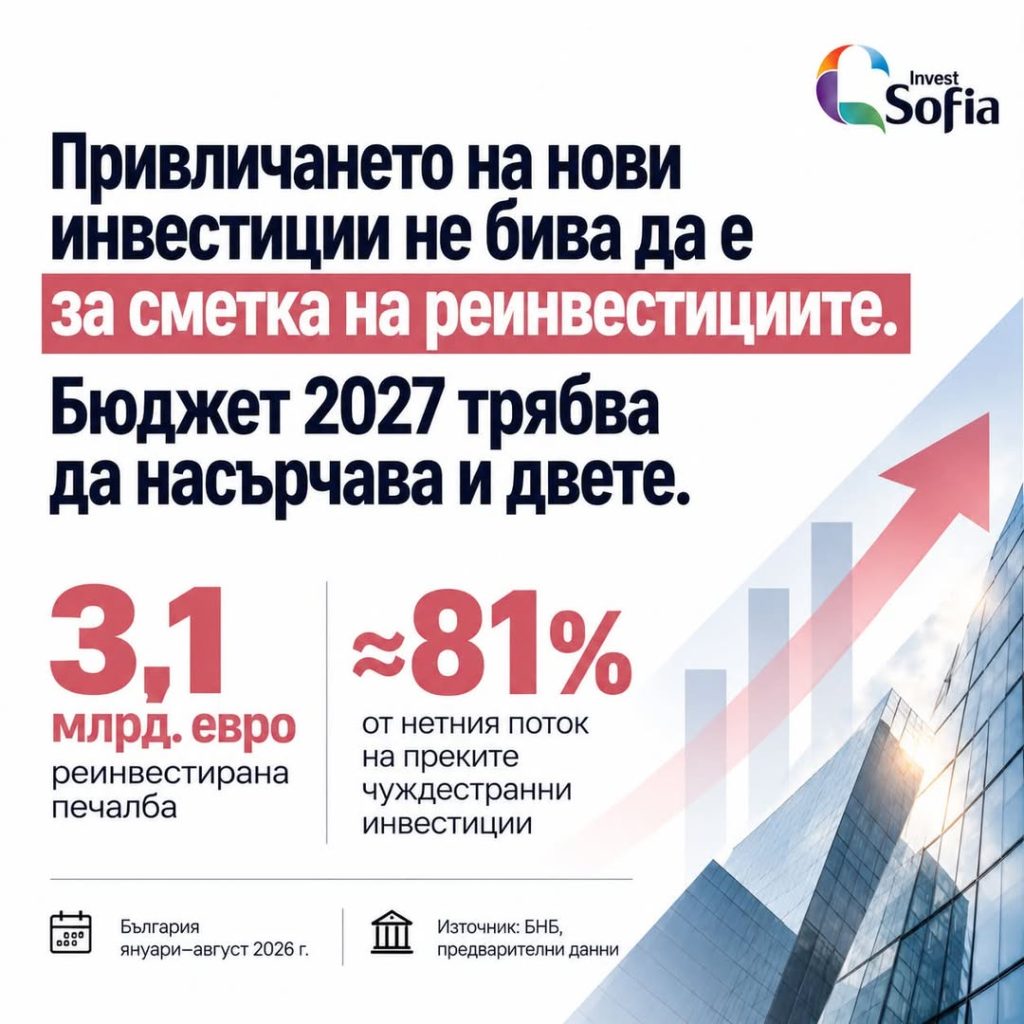
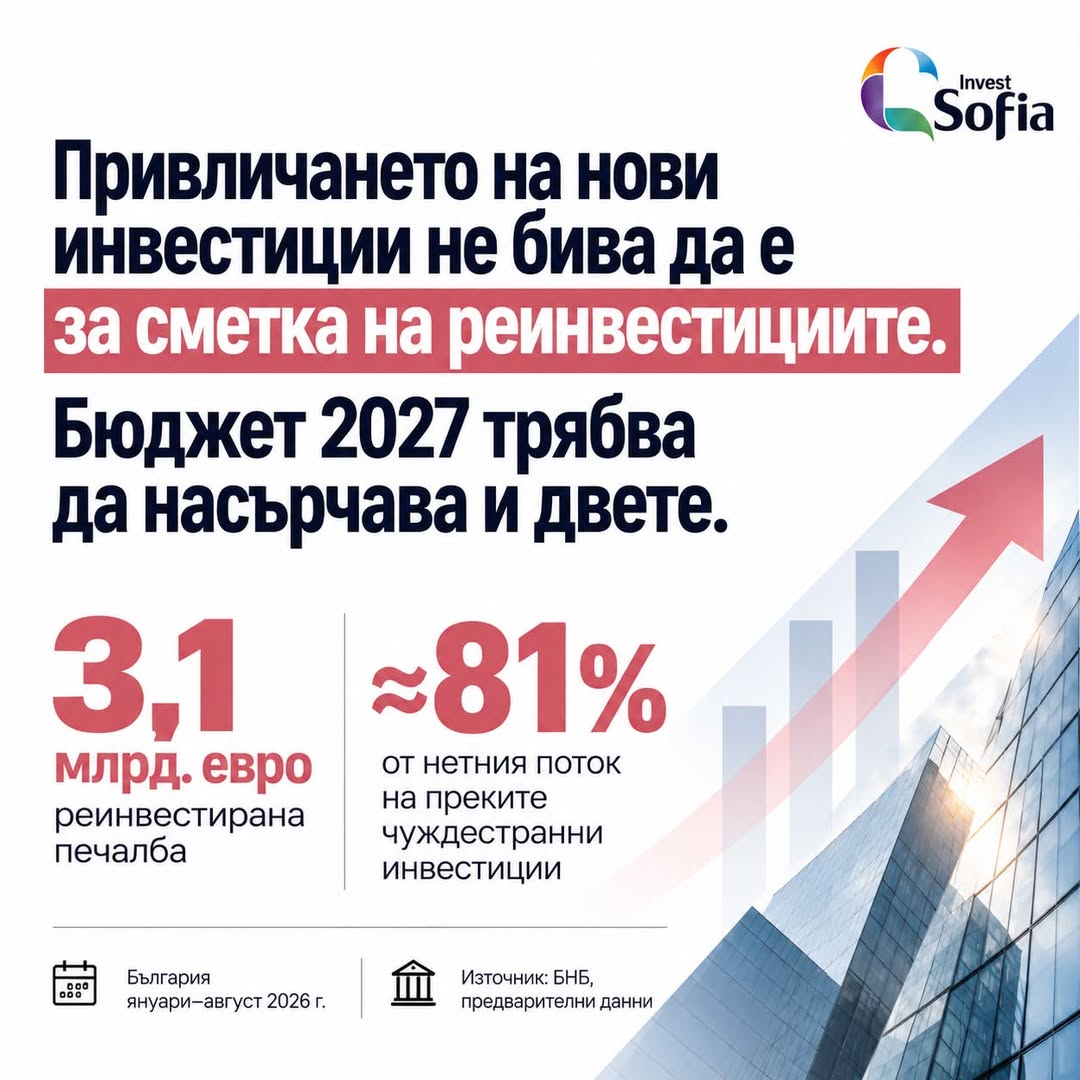
According to preliminary Bulgarian National Bank data for January–August 2026, cited in the Agency’s analysis, reinvested earnings amounted to €3.1 billion, representing approximately 81% of net foreign direct investment flows. The figure highlights the significant contribution of established investors that continue to allocate part of their earnings to further investment in Bulgaria.
Proposals to introduce exceptional taxation of excess profits in certain sectors and increase the maximum social security contribution base should be assessed not only in terms of expected budget revenue but also for their potential impact on investment activity. Additional costs may affect companies’ financial projections, reduce resources available for production expansion and delay technology and research and development projects.
For Sofia, these decisions have tangible economic implications. The expansion of established businesses creates opportunities for employment, the development of R&D centres and additional contracts for local suppliers. The capital’s competitiveness as an investment destination depends on both the quality of its local business environment and the predictability of national economic policy.
Invest Sofia has identified reinvestment as one of its priorities for 2027. Through Sofia IS, its One-Stop-Shop service and the Green Card initiative, the Agency works to address administrative and organisational barriers to investment and support companies in the subsequent stages of their development.
The Agency advocates a predictable, multi-year framework for taxation and social security contributions, advance impact assessments of additional business burdens and consistent measures to reduce administrative costs.
Sustainable public finances require both effective expenditure control and policies that support economic growth. Investments made by businesses today help determine the productive capacity, employment opportunities and tax base on which future public budgets will depend.